
Irish Stew




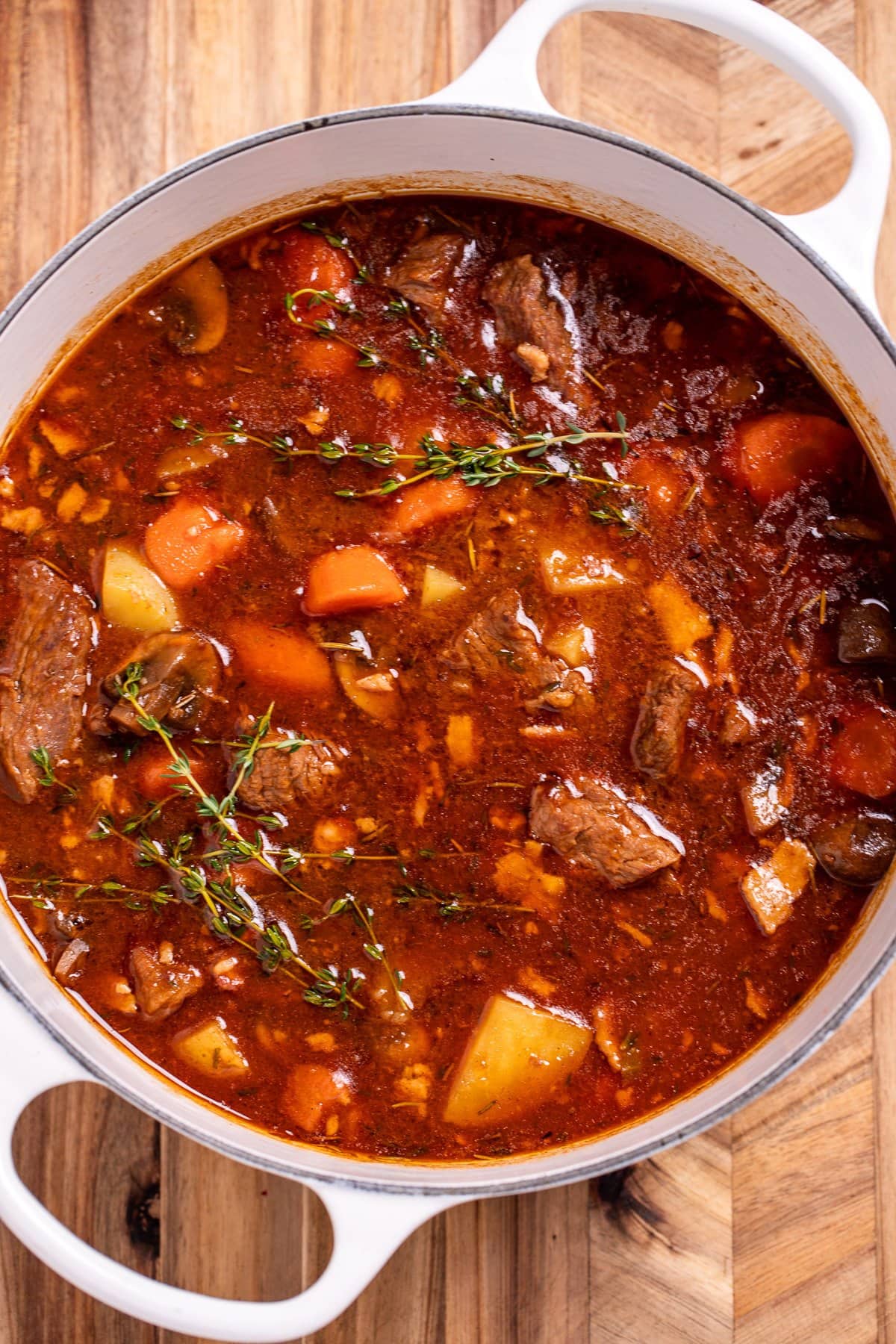
Irish Stew is a classic Irish comfort food made with pieces of beef slowly cooked in a tomato based broth with beer, bacon, veggies, potatoes, and herbs, perfect for chilly nights!
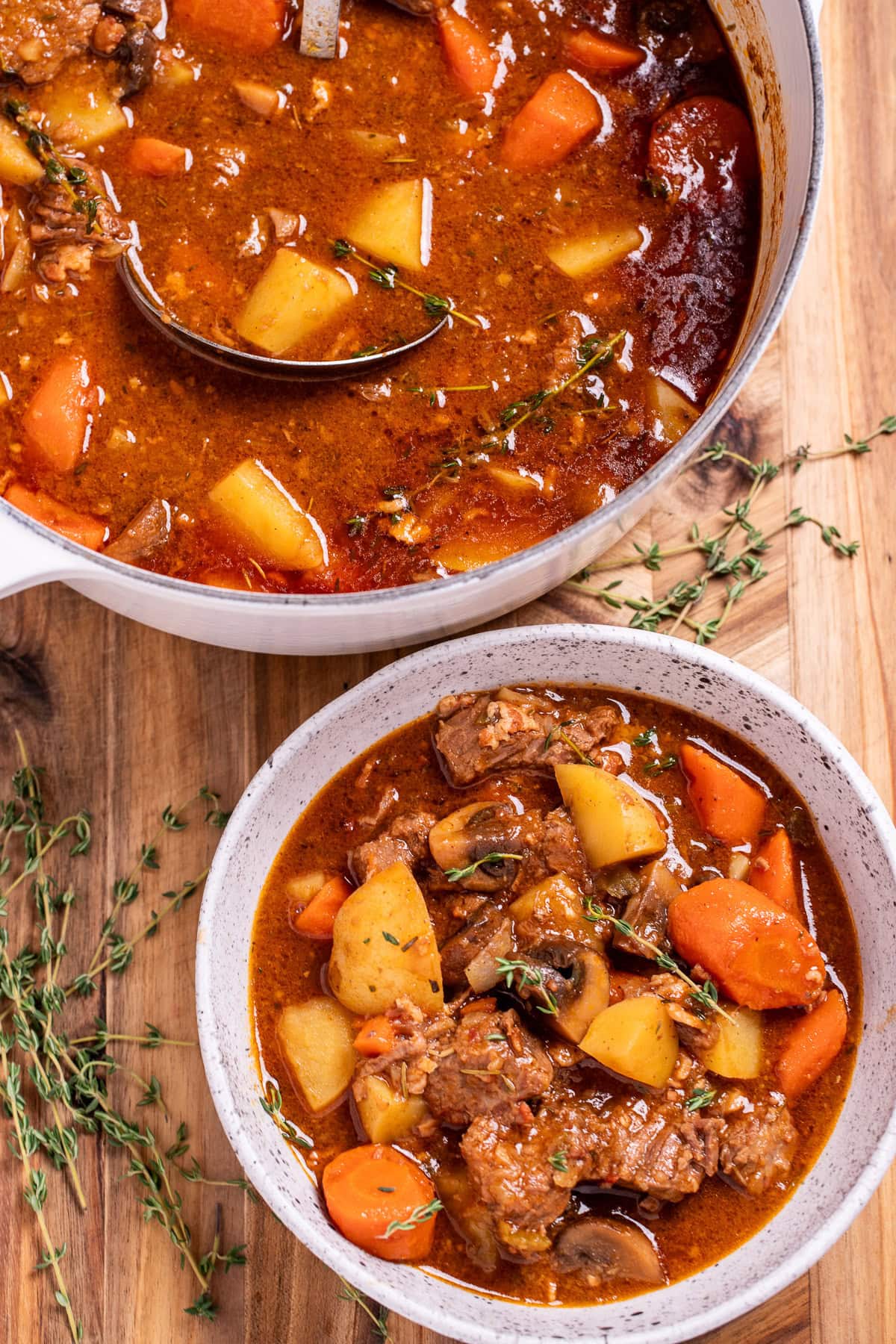
This Irish Stew is something my family has been making for generations, with a few changes of my own. My family’s recipe used very basic, wholesome ingredients that came together in a rich savory broth. This does have a long cooking time, so pick a day when you’ll be home for a few hours before dinner.
I’ve updated my family recipe to include gluten free beer, and bacon for flavor. I’m sure you’re going to love this recipe, and it will soon be as nostalgic for you as it is for me!
If you love this Irish Stew recipe, you’ll also love my Instant Pot Beef Stew, or my Reuben Soup!
Table of contents
Why You’ll Love This Recipe
Insanely Tender Beef – This Irish stew simmers for a couple of hours, giving you the most insanely tender pieces of beef that absorb all of the flavors of the broth.
Layers of Flavor – This Irish stew has so many amazing flavors going on that come together beautifully, using a combination of beef, bacon, herbs, veggies, and gluten free beer simmered together for hours.
Classic Comfort Food – This is a classic comfort food and one of the traditional Irish dishes I grew up with (with a few small changes), perfect for cold nights!
Ingredients You’ll Need

Beef Stew Meat. For this recipe I get a package of beef stew meat from the grocery store. But it has to be a good quality, because the pieces have to be on the bigger side.
If you can’t find pieces that are at least 1-2 inches thick, you can cut up a boneless beef chuck roast instead.
Beer. I’m using Green’s Gluten Free Ale because it’s as close to Guinness beer (Irish stout) as you can get while being gluten free (if you’ve found another alternative, let me know!)
If you’re not gluten free, just use the regular Guinness Irish Stout.
Gluten Free Flour. I like to coat the beef in gluten free 1-to-1 flour before browning, to help the pieces brown nicely, and later to help thicken the broth as the stew simmers.
If you’re not gluten free, you can just use regular all-purpose flour.
Olive Oil and Butter. I use olive oil to brown the beef, and butter to add some flavor. The butter will burn if you use it to brown the beef, so I recommend adding it later.
You can also use vegetable oil, or cook the bacon first and remove the pieces, using the leftover bacon grease to brown the beef.
Bacon. This is optional, but I think adding some bacon really adds a nice flavor to the stew.
If the bacon produces too much grease, remove some of it with a spoon before adding the broth to the dish.
Onion. I like Vidalia onion because it has a nice flavor, but yellow onion will also work.
Celery and Carrots. Celery will give us a nice savory note, while carrots balance that with a sweeter flavor. I cut both of these on the larger side for stew.
Garlic. Fresh garlic cloves give the best flavor, but you can also use garlic powder instead.
If you don’t like to dice fresh garlic, try getting a garlic press, which makes the job a lot easier and faster!
Tomato Paste. This is crucial for giving the broth that nice rich flavor and texture.
Worcestershire Sauce. This adds a nice savory smokey note to the broth. Make sure the one you’re using is gluten free, because it varies by brand for this ingredient.
Mushrooms. I use cremini mushrooms, or white baby bella mushrooms, and just quarter them.
Would you like to save this recipe?
Frozen Peas. These can be delicate, so we don’t want to simmer the peas the entire time. Stirring frozen peas in at the very end will be enough to heat them through.
Potatoes. Traditionally, my family peeled and cubed russet potatoes for this recipe. Today, I usually use gold potatoes, because I like the way they hold up in soups and stews.
If I’m serving the stew over mashed potatoes, I’ll usually leave the potatoes out of the stew entirely.
Beef Broth. If you have beef stock, that will be more flavorful. I also use unsalted broth, so I can add the right amount of seasoning later. In a pinch, you can use vegetable broth or vegetable stock.
Herbs & Spices. I always add a good amount of herbs to this stew! Like fresh thyme, dried rosemary, and dried bay leaves.
Make sure you remove and discard the bay leaves before serving. Then just add kosher salt and black pepper to-taste.
Kitchen Tools
For this Irish Stew recipe you’ll need a medium sized dutch oven or stock pot, and a medium mixing bowl.
How to Make Irish Stew
Pat the beef dry with a paper towel, and add to the mixing bowl. Add the flour and toss the beef until each piece is evenly coated.
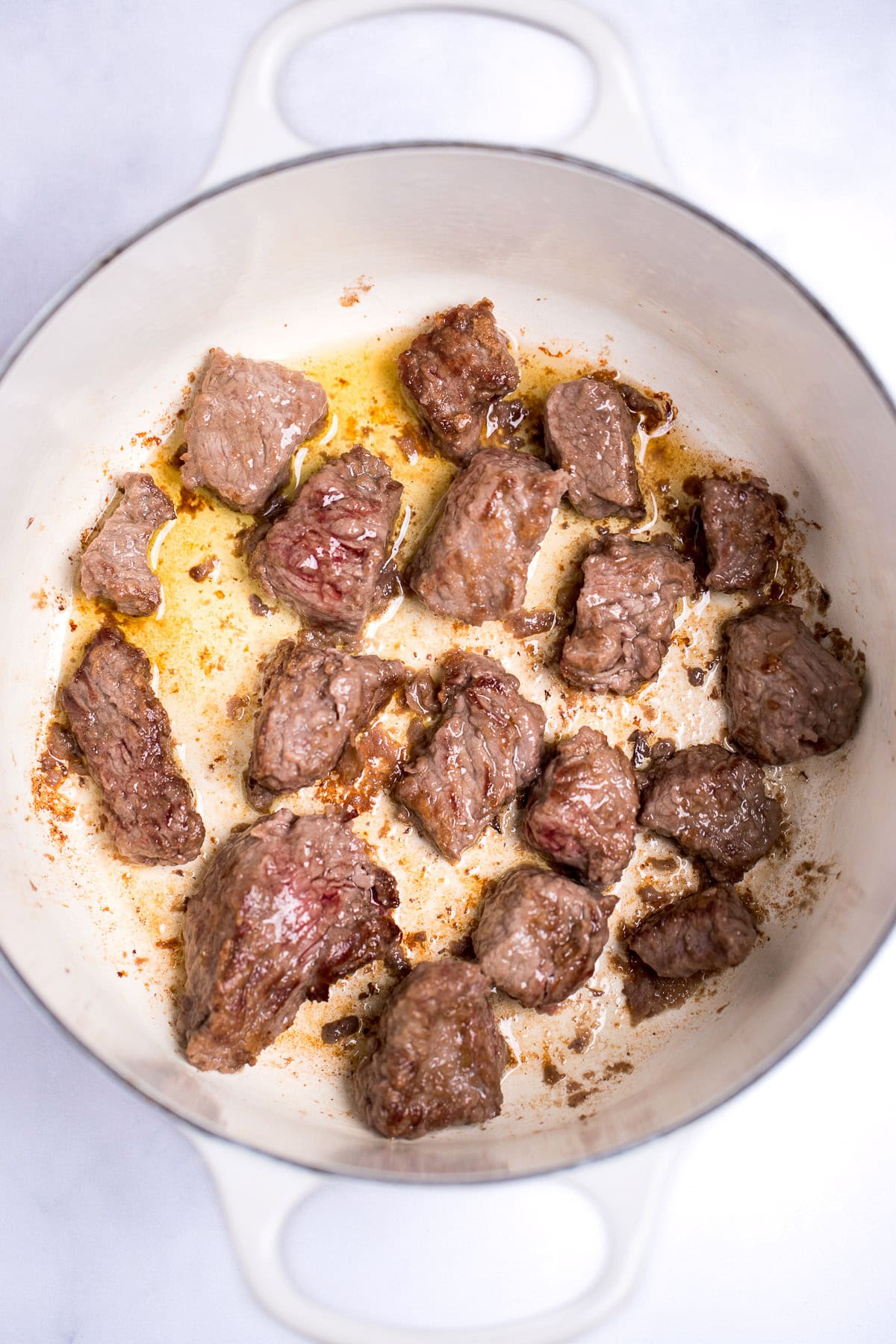
Add half of the olive oil to the dutch oven over medium-high heat. Add the beef in a single layer, leaving some space between each piece (you may need to work in batches). Cook for 1-2 minutes, or until browned on one side, then turn and repeat until all sides are browned. Remove the beef from the pot and set aside.

Add the rest of the oil and butter. Then add the onion, celery, and carrots, stirring occasionally and scraping up the browned bits from the bottom of the pot.
Cook until the vegetables soften and the onions become translucent, about 4-5 minutes.

Move the vegetables to the side of the pot and add the garlic, cooking for less than a minute, then mix everything together. Do the same for the tomato paste, cooking for about a minute and mixing with the vegetables.
Push the vegetables to the side once more. Add the chopped bacon to the open space and cook, stirring occasionally, until browned. Stir the bacon together with the vegetables.

Stir in the beer, beef broth, mushrooms, rosemary, thyme, salt, and pepper. Bring everything to a boil, then reduce to a simmer over medium-low heat.
Stir to make sure nothing is sticking to the bottom of the pot. Add the bay leaves on top, gently pushing them under the broth.

Place the lid on the pot and simmer for 1 1/2 – 2 hours, stirring occasionally, until the beef starts to become tender and breaks apart easily. Remove the lid and stir in the potatoes.
Simmer for an additional 30-40 minutes, or until the broth has thickened and the potatoes are fork-tender. Stir in the peas, adjust the salt and pepper as-needed, remove and discard the bay leaves, and serve.
Recipe Variations
- Try adding other root vegetables like parsnips or turnips to the stew.
- You can swap the beef for lamb, but this will change the flavor of the stew as well.
- If you don’t love beer, you can replace it with additional beef stock. Or try using 1/2 cup sweet red wine instead.
- Try adding other veggies to this Irish Stew like pearl onions, green beans, diced tomatoes, cabbage, or Brussels sprouts.
- Make this spicy with a dash of cayenne pepper, hot sauce, or red pepper flakes.
Recipe Tip! Check the stew every so often while it simmers to make sure it’s still simmering, and stir to be sure nothing is sticking to the bottom of the pot.
Frequently Asked Questions
If the Irish stew turned out too thin, there are two great ways to fix this. First, you can simmer the stew until the broth cooks down and thickens up.
For a faster method, whisk 2-3 tablespoons of cornstarch with a few tablespoons of cold water. Stir the cornstarch slurry into the stew, then simmer for a few minutes until everything thickens.
Recipe Tip! I like to wait to add the potatoes until towards the end. If you add them in the beginning, they’ll be falling apart by the time the stew is done simmering.
More Soup & Stew Recipes
- Ham & Split Pea Soup
- Crab and Corn Chowder
- Sausage and Potato Soup
- Cabbage Chicken Soup
- Slow Cooker Cabbage Soup
Storage
Refrigerate Irish Stew for 3-4 days in an airtight container.
Freeze leftover beef stew for 2-3 months in a freezer-safe container.
Cooking Tips
- I leave the bacon fat in the stew to add flavor. If your bacon renders down and leaves too much fat (roughly more than 2-3 tablespoons), ladle some of it out of the pot and discard.
- Leave some room between the pieces when browning the beef. If everything is sitting together, they’ll steam more than sear.
- After browning the meat and cooking the vegetables, scrape up all the browned bits on the bottom of the pot when adding liquid. These bits add a huge amount of flavor to the Irish stew.
- When you place the lid on the pot, check every so often to make sure you have a gentle simmer. We don’t want this to boil for two hours.
Tried this recipe? ⭐ Leave a review and share what worked best for you—your tips help other home cooks get the same delicious results!

Irish Stew
Equipment
- 1 medium dutch oven or stock pot
Ingredients
- 2 pounds beef stew meat, cut into 1-2" pieces
- 3 tablespoons gluten free all-purpose flour, 1:1
- 2 tablespoons extra virgin olive oil
- 2 tablespoons unsalted butter
- 1 medium Vidalia onion, chopped
- 3 medium carrots, peeled and chopped
- 2 medium celery ribs, chopped
- 3 cloves garlic, minced
- 3 tablespoons tomato paste
- 1/2 pound bacon, chopped
- 2 tablespoons Worcestershire sauce, gluten free
- 8 ounces cremini mushrooms, quartered
- 11 ounces gluten free beer, (1 can)
- 2 1/2 cups beef broth, low sodium, gluten free
- 1 pound yukon gold potatoes, cut into 1-inch cubes
- 1 cup frozen peas
- 1 teaspoon fresh thyme leaves
- 1 teaspoon dried rosemary
- 2 medium bay leaves
- 1/2 teaspoon black pepper, or to taste
- 1/2 teaspoon kosher salt, or to taste
Instructions
- Pat the beef dry with a paper towel, and add to the mixing bowl. Add the flour and toss the beef until each piece is evenly coated.
- Add half of the olive oil to the dutch oven over medium-high heat. Add the beef in a single layer, leaving some space between each piece (you may need to work in batches). Cook for 1-2 minutes, or until browned on one side, then turn and repeat until all sides are browned. Remove the beef from the pot and set aside.
- Add the rest of the oil and butter. Then add the onion, celery, and carrots, stirring occasionally and scraping up the browned bits from the bottom of the pot. Cook until the vegetables soften and the onions become translucent, about 4-5 minutes.
- Move the vegetables to the side of the pot and add the garlic, cooking for less than a minute, then mix everything together. Do the same for the tomato paste, cooking for about a minute and mixing with the vegetables.
- Push the vegetables to the side once more. Add the chopped bacon to the open space and cook, stirring occasionally, until browned. Stir the bacon together with the vegetables.
- Stir in the beer, beef broth, mushrooms, rosemary, thyme, salt, and pepper. Bring everything to a boil, then reduce to a simmer over medium-low heat. Stir to make sure nothing is sticking to the bottom of the pot. Add the bay leaves on top, gently pushing them under the broth.
- Place the lid on the pot and simmer for 1 1/2 – 2 hours, stirring occasionally, until the beef starts to become tender and breaks apart easily. Remove the lid and stir in the potatoes.
- Simmer for an additional 30-40 minutes, or until the broth has thickened and the potatoes are fork-tender. Stir in the peas, adjust the salt and pepper as-needed, and discard the bay leaves before serving.
Notes
- I leave the bacon fat in the stew to add flavor. If your bacon renders down and leaves too much fat (roughly more than 2-3 tablespoons), ladle some of it out of the pot and discard.
- Leave some room between the pieces when browning the beef. If everything is sitting together, they’ll steam more than sear.
- After browning the meat and cooking the vegetables, scrape up all the browned bits on the bottom of the pot when adding liquid. These bits add a huge amount of flavor to the stew.
- When you place the lid on the pot, check every so often to make sure you have a gentle simmer. We don’t want this to boil for two hours.
- I like to wait to add the potatoes until the end. If you add them in the beginning, they’ll be falling apart by the time the stew is done simmering.
Nutrition
Would you like to save this recipe?
We are a participant in both the RewardStyle and Amazon Services LLC Associates Program, which are affiliate advertising programs designed to provide a means for sites to earn advertising fees by advertising and linking to amazon.com and through RewardStyle.